Showing posts with label Library. Show all posts

Monday, August 5, 2019

The volunteers from Kabir Basti

1:28:00 PM


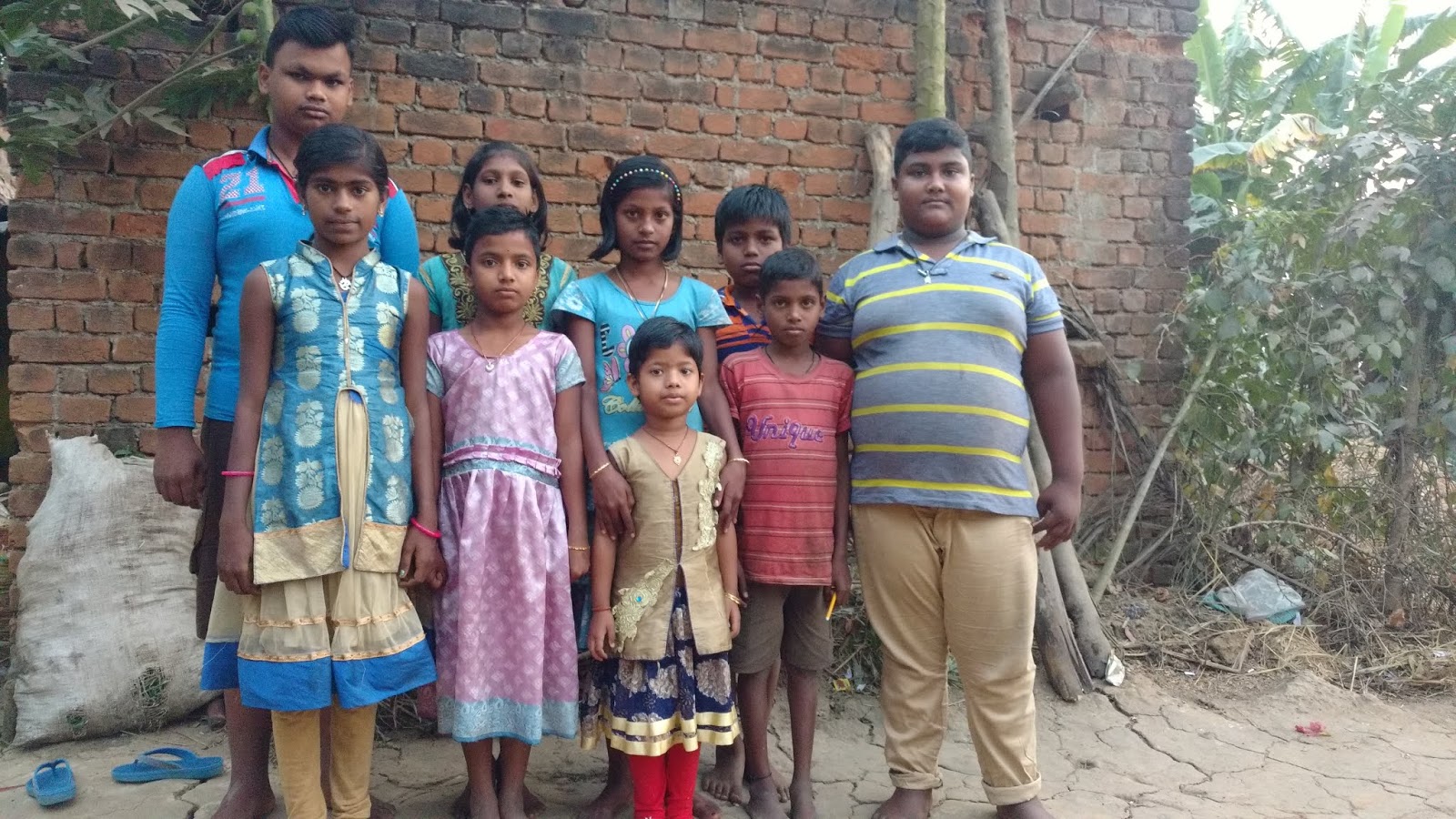
"We have learned many new things, and are ready to take more responsibilities", says Sanjana. She studies in the 9th grade and is one of the volunteers from Kabir Basti, a village in Kathura block of Haryana's Sonipat district. Sanjana's group includes Rajni (11th grade), Neha (9th grade), Shalu (11th grade), Sheetal (10th grade), Ritika(9th grade), Tamanna (9th grade) who belong to Gudda-A division of Kabir Basti, and Nikki (9th grade) and Jyoti (12th grade) hail from the Gudda-B division. These girls have volunteered for collecting the Village Report Card and also volunteer for Pratham's library program.  

From Left to Right - Rajni, Neha, Shalu, Sheetal, Ritika, Tamanna;
Back - Nikki and Jyoti


"We got an opportunity to visit our neighbouring village, and it was the first time we travelled out of our village. It was a wonderful experience", says Sheetal. These girls visited Ahulana -A and Ahulana- B villages for preparing the village report card and are cherishing the experience. 

"Talking to unknown people was fun", says Tamanna. Her sentiment is echoed by others who admit that this experience has taught them many new things. Most of these girls do not travel outside their village. The only time they are out of their house is when they go to school, and it is not very far from where they live. Hence, travelling outside their village was like an adventure and interacting with people not belonging to their village was an experience in itself. 

But the journey was full of difficulties. 

"Many villagers from Ahulana did not entertain us, and sometimes they shut the door on our face", recalls Nikki. "But we persisted", she says with pride. "Some families did not agree that their children cannot read simple text. They insisted that their children go to school, and hence they learn. But when we asked the children to read, they had to accept", says Ritika. 

It is clear that travelling to a new village and talking to people was an experience these girls loved, and they will value it for a long time ahead. But how has it changed them? We get a diverse response from the girls when we ask this question. 

"We have changed. This experience has made us bold and confident. We want to explore more villages now", says Neha. "I can feel a change in me. I can talk to people and express myself. Earlier I was shy", says Shalu. "We will talk to our parents and convince them to allow us to travel outside, and spread the message of learning", says Jyoti, the eldest of them all. 

This group of young volunteers is excited to work with us and hopes to create a difference in their village and the neighbouring villages by asking everyone in the community to contribute in improving the learning levels of children. 

·        
·         
·    
·         
·         
·     

Monday, June 10, 2019

The tale of Sujata and Sarojini

12:49:00 PM
Sujata Padhi and Sarojini Mohanto are best friends and like to do things together. They travel to school together, study and play together, and now like to learn in a group. "There are many ways one can learn in a group, and it is not restricted to one group", says Sujata. "It allows us to explore more", adds Sarojini.


We are at Karadiha village in Karanjia block in Odisha's Mayurbhanj district. The two languages spoken in this village are Santhali and Olchi, and as the district has a tribal population, it is a challenge for them to learn in Odiya. However, thanks to the library program in the village and the learning camp in school, children in this village have found a new love for learning. Sujata says the group has also allowed them to develop leadership skills, and learning in groups is something that they have newly discovered, but now everyone is becoming used to it.

"The group allows us to explore each other. If one of us does not know anything, the others help us, and we help them if we know anything", says Sarojini. Both Sujata and Sarojini admit that they have become more interactive, and this is one change they observe in themselves. Sarojini further states that their mothers are a witness to it, and they also feel that their daughters have become more expressive and share a lot of things at home.

Sarojini, the more talkative of the two, smiles when we ask which are their favourite activities. "We like the games and activities, and also puzzles and Antakshari in English. We also enjoy the project work in science", she says. She further admits that language is not a 'problem' for them anymore. However, the difficulties in Math persist, and they are ready to work hard and learn more.

The newfound enthusiasm and interactive behaviour have translated into Sujata and Sarojini's interaction with their school teachers. The latter admit that children have become interactive and participate in the class with enthusiasm.

Monday, May 20, 2019

The library at Hyakanuru village

1:16:00 AM
"I talk to other women in the village, and I want to see this grow as a movement." Rekha expresses her optimism during our meeting at her house. We are at Hyakanuru village in Karnataka's Mysore district. It lies in the T. Narasipura block, where people either cultivate rice or travel to Mysore for work. Rekha's family is involved in the former. While she is a housewife, she also helps her husband on the field sometimes.


"There was no after-school class in the village. I wanted to initiate it so that children could revise what they studied in school. I wanted it in my village, just like they have it in cities", she says. Hence when she came to know about Pratham's library program, she felt the need to initiate it and implement it at Hyakanuru. Rekha was also worried that children spent their time roaming in the village after school, and nothing was productive. The time from 4 pm to 6 pm was without any activity, and the library program filled the gap!

There are ten children in Rekha's library, and she enjoys her duty of ensuring that they learn in groups. "The good thing about this is that I also learn with children, and it is like a revision of concepts for me", she says. She has identified that children struggle in Math, and she has come up with some activities of her own. "I ask children to identify the price of daily use items and then frame the problems based on them. Children find it interesting, and it improves their Math as well."  For the activities concerning the Kannada language, the activity of story-telling has helped the children. "They now know more words", she says. 

There is a marked improvement in children, according to Rekha. They are more confident, express themselves clearly, and more importantly, they enjoy all the activities. "The group learning technique has helped them, and that is the reason they have changed. It makes me happy", she says. Now in the initial stage, Rekha is determined to carry this forward as a movement. She is confident that her daily interactions with other women in the village will be fruitful and one day, the whole village will contribute to this initiative of improving the learning level of children.
  

Sunday, March 24, 2019

The Library of Pallavi and Sitalakshmi

12:36:00 PM
Muthathi is a small village located in the T. Narsipura block of Karnataka's Mysuru district. Most of the people here are daily wage labourers. Some of them work in agricultural fields, whereas some of them are small-scale farmers. Pratham decided to start the library program in the village, and two volunteers have ensured that it is implemented in the village with sincerity and dedication. Two friends Pallavi and Sitalakshmi - both pursuing their graduation from the nearby government college - have taken up the dual task of improving the learning levels of children and ensuring community participation.

Pallavi 


"We wanted to do something for the village", begins Pallavi. "In college, we understand how important it is for children to know their basics right." Sitalakshmi further stresses that they want children to follow their footsteps. "But if they want to continue higher studies and enter college, they should be familiar with language and math." Both of them began with the library program in August 2017, and it continues even today.

Sitalakshmi


"We observed that initially, children did not mingle well with each other. They came to our house but did not pay attention to what was told to them. They came because their parents sent them to us", says Pallavi. "However, activities brought a change in many of them. Soon it became a talking point in the village." Sitalakshmi nods in agreement, and they both narrate that more children joined the library because of the activities. They both also agree that writing is still a concern and both of them are trying their best to address it.

"But there is a change", says Sitalakshmi. "Some of the children are able to write well. When I dictate words, they write them down." Pallavi further says that she sometimes gives them keywords and they form a story. "We also give them a topic and children then talk about it. They now look confident and have become more expressive", she says. "The activities like drawing, painting, games, role-play and making models have also contributed to this."

Both Pallavi and Sitalakshmi want a visible change in their village. Their parents are daily wage labourers, but they could study till college because of the encouragement and motivation at home. "We want the same to happen with the children of our village", they say with a smile.

Sunday, January 6, 2019

Satiben Vaghora's Library

12:32:00 AM
·       "I have not studied, but now I know how to sign a document. That is the change in me!" 

Satiben Vaghora lives in the Ajapar village in the Anjar block of Gujarat's Kutch district. Until a year back she was not aware of the importance of learning and education, but things changed last year. Pratham approached her for implementing a library at her home, and likewise, children assemble at her home every evening and learn together in groups. Vinod, her son, who was in 8th grade then, was asked to lead the group. Satiben was given a role in supervising the proceedings. The year that has passed by has transformed her as well - from a person who had no knowledge of learning levels and its importance, to someone who is now a pivotal figure in conducting the library proceedings. 


"This place is of great importance. Children study here. It is my responsibility to keep it clean", she beams as she shows us the place where the library class takes place. "Everyday I clean this place and spread the mattress. I also arrange two water bottles, and all this before children start the session." Satiben thinks that every child in the village should learn and that is how the village will find a solution to its problems. Satiben also left her laborious job and decided to spend time for children. The first thing that came to her mind was children needing enough space to sit through the two hours of the library session. To achieve this, she cleaned the animal shelter and tied her animals elsewhere in the house. This new place thus became the library!

"Initially Vinod found it difficult to get things done from the children. They were not very cooperative. In those days, I decided to step in. Everything was new, but now children follow all procedures and participate in every activity", she says. Vinod now stays in another village as he is studying in higher grades. But the library continues, thanks to the serious involvement of Satiben. The sentiment of learning that has been created at her home has helped Vinod aim high. He has decided to study till 12th grade and then opt for a proper job instead of doing a laborious job like his parents.

However, Satiben's job does not end there. In case a child remains absent from the library for more than two days, she personally visits his/her house to know the reason behind the absence. Overall, children listen to what she says, and hence their mothers feel that she should guide them ahead. Like Vinod, other children have also begun to share their ambitions with her during the library session. For her, this is a huge accomplishment. And what has she achieved from this experience so far? Has she seen a positive difference? To these questions, she asks us to refer to the very first statement with which this conversation began.

We wish Satiben all the best for her endeavours ahead. 


·          


·         

Thursday, November 22, 2018

The Library at Kurubara Halli, Mysore

12:49:00 PM
"When my daughter Divyashree started as a volunteer, we did not know our work would expand so much...", recalls Savita as we talk to her about Pratham's library program. We are at Kurubara Halli, a locality in Mysore. Her daughter Divyashree is an engineer and now works, and hence we could not meet her. Her husband works in a college in the city, and she is at home the whole day. Children from neighbouring houses visit her home to read books and solve activities, and it not only keeps her busy but also happy.


Savita was aware of Pratham's work, and she agreed to host the library program at her house because she was keen to work with children. She asked Divyashree to volunteer and chose to be a supervisor. "We mobilised around fifty children in the locality and encouraged them to read. They began to visit our house in batches, and soon it became a daily routine for us", she recalls. 

Kurubara Halli is a locality where families of poor economic background reside. Most of them are daily-wage earners, house-maids, vegetable sellers, milk-sellers, small shop-owners, while a few of them work at the Mysore zoo. Many of these families did not have resources to buy books. Savita felt that they should know what is happening in the world and for that they should be able to read. And if their parents are not able to provide support, someone should do that. "I sensed this, and hence I chose to fill that gap", she says. 

"I have observed a change in these children. Initially, they were not very confident and hence did not mingle much with each other. However, now they enjoy working together. The activities are fun, and working in groups has made them become friends with each other", she says with a smile on her face. 

Savita also points out to a change in the attitude of mothers of these children. "They come to me to collect storybooks and those who are able to read, narrate these stories to their children." Savita further explains that these mothers have formed a network and they talk among themselves about the children's future.

So, how has volunteering for this program helped her? "I am a housewife. However, I did not have time as I was confined only to household work. But as I began spending time with children, I experienced relief from my daily chores and tensions. I also earned a lot of respect from people and neighbouring houses. I feel proud of what I am doing. I wish to continue doing the same and with more number of children every year", she says. 

We wish Savita all the best in her future endeavours.        

Monday, October 22, 2018

The Library at Odisha's Lunahar village

11:42:00 AM
Lunahar is a small village, located in the Gop block of Odisha's Puri district. Apart from growing coconut trees and banana trees, the people here indulge in cultivating rice, which also forms their staple food. Four years ago, Pratham implemented the 'Read India' learning camp in this village. Not only the learning camps were well received, but they also inspired three women to implement the library program in their village.

The three women - Rashmita Pradhan, Amita Pradhan and Basanti Pradhan - are convinced that the learning levels of children in the village should improve. Rashmita and Amita have a farm of their own, where they grow rice, whereas Basanti's husband is in Gujarat for work. Rashmita recalls that they had experienced the door-to-door visit of Pratham volunteers during the 'Read India' direct intervention in their village. It had made them aware of what learning levels are and why should they be improved. However, last year they came to know of Pratham's library, and they were happy that it involved their participation.
"During the intervention, they had tested the children, and we became aware that children should learn better. But with this program (library), we also can participate", begins Amita. "With an improvement in learning levels, children can progress ahead in life", she says.

Rashmita Pradhan, Amita Pradhan and Basanti Pradhan (From Left to Right)

The three of them underwent an orientation where they were told about the content and activities of the program. "We found the activities engaging, and we liked them. We agreed that we should implement this program in our village", says Amita, the most talkative of the three. "We also felt that the content was related to the school textbook and when children will use it, they will progress", says Basanti, as she joins the conversation.


The three of them discuss the library every week and plan things for the coming week. They also ensure that children complete all activities that are assigned to them. "We are relatively free during the evening, and hence this is the right time for us to monitor the children. They now sit in one place and learn. It makes us very happy", says Rashmita.
As we continue the conversation, we are greeted by Rakesh Pradhan who wants to be a volunteer for this program next year. He is a part of the library program, and also was a part of the Read India direct intervention in his village four years back. Now in the eighth grade, he was in the fourth grade during the intervention. He likes to read difficult words, and his favourite activity is writing a story after seeing a picture. We try to talk to him, but Rakesh feels shy and refuses to say anything. We tell him to speak in Oriya so that the others can translate it for us in Hindi. "I like to learn in a group", he begins. "Two of us are weak in solving a division problem, whereas the other three struggle in reading. We help each other", he says. Rashmita tells us that Rakesh was at a lower level in Math and these group activities have helped him improve. We ask Rakesh about his other favourite activities, and after an initial hesitation he opens up!

Rakesh Pradhan 
"I love the colouring activity on the tablet. Before filling the colour, I imagine the object, and it helps me enjoy the activity."
Next year Rakesh will be in the ninth grade, and hence won't be a part of the library program. However, he wants to volunteer with us and ensure that his juniors also improve their learning levels like him. 

We wish the villagers all the best for the present and future initiatives in education! 

Saturday, September 15, 2018

The Parmar sisters of Vidi

7:15:00 PM
Vidi village lies in the Anjar taluka of Gujarat's Kutch district. A vast majority of children here are first-generation school-goers, and hence this village has not progressed on the social, economic and educational parameters. People here are involved in laborious jobs, and many of them work as rickshaw drivers and truck drivers. Apart from this, many people here practice seasonal migration to indulge in salt cultivation. Owing to all these factors, children have to change their schools quite often, and this inconsistency has resulted in their poor learning levels.

From left to right - Poonam, Kiran and Vanita
Three cousin sisters - Poonam Parmar, Kiran Parmar and Vanita Parmar - understood this problem and felt that they should do something to solve it. We met them at their home near the village primary school and tried to understand how they are conducting Pratham's library program for children in their village. "We came to know about this program last year", begins Poonam, the eldest who is in 10th grade. Kiran and Vanita, both in 8th grade, nod in agreement. "We liked the concept and felt it would help children of our village read and write better."

The girls admit that they had forgotten a lot of concepts which they learned in school. Hence they liked the learning material of this program along with the activities and games they had to conduct. "It helps us strengthen the fundamental concepts of children, and that enables them to learn better", says Kiran. "... and it also helps us revise what we have forgotten...", adds Vanita with a smile.

What are their observations about children? "We feel that Math is a bigger problem for children as compared to the language. While children can recognise numbers, math operations is still a concern", says Poonam. "At the beginning, some children had a problem of recognising numbers, but then we taught them. That is why we like the activities", says Vanita. All three of them agree that conducting language sessions is easier. Stories and question-answer sessions are the most popular language sessions among children.

There is one more reason why all the three of them are happy about the library program."Our sessions have ensured that children sit in one place and study. Many of them also solve their school homework along with the library activities. These sessions are like tuition classes, which otherwise only a few rich families in the village can afford", says Poonam. "Yes, everyone can study", adds Kiran. As we near the end of the conversation, we ask the three of them how being a part of this program has helped them.

"This program has enabled us to do something for our village. We are glad that we are helping the children and making them better citizens of tomorrow", says Vanita. "...but this program has changed us as well...", she says. "We were less talkative and did not know what to do. We now use our spare time doing some productive work", adds Poonam.

The Parmar sisters are happy that children in their village are learning well. Out of the three Poonam wants to join the police force. The other two want to continue their education and completing 10th grade is their next goal. We wish all of them well for their ambitions in life ahead. 

Monday, May 28, 2018

When children lead the way

11:13:00 AM

As we climbed the steep stairs of a pretty house in a village in Kashmir, we were greeted with the
excited chatter of children who were waiting for us for 2 hours. This was one of the many Pratham
libraries where children gather every evening for a few hours and work on reading and math with some fun activities. The volunteer responsible for the group introduced us to the children.

Children were sitting in groups with 1 group leader for each group. Some groups were engaged in
reading and others were huddled on a picture with crayons. The group leaders were actively involved in the process ensuring that everyone gets a chance.

When all the kids left for home we had a small discussion with the group leaders. These leaders were
children themselves but they could explain the entire schedule of the library program. They spoke about the challenges they faced when they could not read and how it helped them in mentoring the new children. One of the children said, “I feel like a teacher. But some of the kids in my group are also my friends so I get to have a lot of fun.”

Another girl smiled and said, “I can talk to my group the way my teacher (the volunteer) did. She was
very patient with me and that’s how I know that I should be patient as well. I use this way of learning
with my younger sister as well.” On this the volunteer said, “These children are more than just group leaders. A lot of children in this library are readers and these group leaders are the ones who put in all the hard work. At times they also help get children to the library in case they don’t come for a few days.”

The children started sharing experiences and funny instances of their time in the library. They spoke
about the challenges they faced with some children in their groups. “One boy in my group kept making silly mistakes in simple math problems. But I did not give up and used straws, stones and whatever I could get my hands on to teach him. He is improving but I think I am growing fond of Math as well,” said another group leader.

It was getting dark so we decided to leave. The bunch of group leaders gathered their books and walked out of the house with a happy and proud smile on their face.

Monday, April 23, 2018

The magic of Science

2:50:00 PM


14-year-old Anubhav Bagh is an all-rounder. He stood first in his school in drawing and secured the second position in his class in academics. And to add to these achievements, he came second at the block-level running competition! But apart from all these feathers added to his cap, there is one thing that Anubhav enjoys the most, and that is Science!

Anubhav hails from the Bankbija village in the Sonepur district of Orissa. This district is one of the 250 most backward districts of the country, and like the majority of the people here, his family earns its living by working as labourers.  So how did young Anubhav develop an inclination towards Science?

“My son was interested in Science since he was in 5th grade”, Janaki Bagh, Anubhav’s mother recalls. “He used to open our radio box, play with the wires and spent a lot of time probing them”, she says with a smile.


When we enter Anubhav’s house, we find that a small corner is reserved for Abhinav’s models. Apart from the models, we can see some wires; a couple of switches, plug points, bulbs and the place looks like a small laboratory. His family members greet us and tell us about themselves. Anubhav’s brother, the breadwinner for the family, works as an agriculture labourer. Despite the fluctuation in the income, the family happily supports Anubhav in his experiments. This support and encouragement have allowed him to dream of a career working with machines and creating something new.

But there is one person in the house who has always helped Anubhav in his experiments. And that person is his niece – Karishma Bagh.  

Karishma goes to the neighbouring households and collects bulbs, wires, small gadgets, machines etc. from them. “Do not throw these things; instead give them to us”, she tells them.  And once Anubhav creates something out of this material, she happily shows the models to them. “I feel delighted when I see the completed model. It’s like magic!” she says.  

However, since the past few months, Anubhav has begun to use the Tablet, and the scientific content in the ‘PraDigi’ App installed in the Tablet keeps him busy and engaged. He has conducted a few experiments and made a few models by referring the videos in the App. “The tablet has widened his range of experiments. Some models which he thought were difficult seem doable now”, his mother said.

Now in 8th grade, Anubhav wants to volunteer at the Library Program next year and explain his projects to every participant from the program.

Monday, April 9, 2018

Sombari Singh’s Pathagar

1:35:00 PM
Mayurbhanj district in Orissa is one of the most backward districts in the country. The majority of the population here is dependent on agriculture for their survival, and a large number of people are either small-scale farmers or labourers.  Some of them also survive by doing jobs that are generated through different government schemes enacted for the district.  Despite this background, the village of Solarapada is experiencing an increase in awareness about education, thanks to the initiatives of women like Sombari.

Two years back, when team members from Pratham went to Solarapada to initiate the library program, they found Sombari who wanted to do something for the village. “The first thing that I thought was education”, she says. Solarapada was experiencing a good enrollment of children in school, but they were hardly learning anything. On many occasions, Sombari would see children roaming around in the village after school and doing nothing. “There was nothing to do, and it disturbed me a lot”, she recalls.
Being a graduate, Sombari could understand that there was nothing in the village to monitor if the children were learning well. “They were enrolled in school. But there are many obstacles in their learning”, she says.

The major obstacle here is the language. Majority of the people in Mayurbhanj speak Ho and Santhali, whereas the medium of instruction is Odia. When children are enrolled in school, the teachers have to translate the teaching from Odia to the dialect, and this practice continues for some years till the former become comfortable in Odia.
When the team members at Pratham explained her about the library program, she liked the concept of group learning and use of activities, songs and games to aid learning. And in no time, the library program became active in the village.

“It was amazing to see the participation of women in this program, and it made the entire community know about it”, she said. However, Sombari had already thought of the next step. If we collect books from everyone in the village and maintain a library, the whole village would benefit. She shared this concept with a few mothers she knew, and they gladly agreed! The drive for collecting books began, and as this concept reached the village Panchayat, they arranged for a small place in the village where these books could be kept. A ‘Pathagar’ was soon formed, Sombari Singh’s Pathagar!
“Every child in the village can come here, sit and read books. They can also borrow books and take them home. But if any adult wants to borrow them, they have to pay”, she says, explaining the rules of the place. The money collected in this way is used to buy new books and other miscellaneous expenses.  However, she credits the library program for initiating the activity of reading and learning in the village. “It is because of the program, parents and children are aware of reading books, and hence they come to the Pathagar to read”, she says with a smile.

In the village, Sombari is synonymous with learning. The Pathagar gives her a chance to interact with many mothers. They talk to her about what their children are learning in school and discuss their learning levels. But there is a marked difference in their awareness. “Initially, many of them thought that children should learn until the 5th grade. But now many of them are aware that children should opt for higher studies as there are many opportunities ahead”, she says. The Pathagar at Solarapada is the reason community members meet and discuss their children’s education.   

INSTA FEED

Pratham Education Foundation

Pratham India is the official blog of non-for-profit organization Pratham Education Foundation showcasing exciting stories throughout India.

Follow

 Follow us on Twitter!   Follow us on facebook!   Follow us on instagram!   Follow us on Youtube!